How to Make Restaurant-Style Hot Dogs at Home
A restaurant hot dog is rarely about luxury ingredients. It is about control. The cook manages heat, timing, seasoning, and texture so that every part lands in the right place at once. The sausage has snap, the bun is warm and tender, the toppings taste fresh rather than cold from the fridge, and nothing is watery or sloppy. That sounds simple until you make one at home and end up with a wrinkled dog, a split casing, or a soggy bun that gives up halfway through the meal.
The good news is that restaurant-style results are very achievable in a home kitchen. You do not need commercial equipment, and you do not need a long list of specialty ingredients. What you do need is a little judgment. The kind of hot dog matters. The way you heat it matters. The bun matters more than most people think. Even the order of assembly changes the final bite.
After years of cooking for groups, testing different brands, and paying close attention to how the best stands and diners work, I have found that the difference between an average backyard dog and one that feels like it came from a favorite lunch counter usually comes down to a handful of decisions. Make those decisions well, and the whole thing changes.
What restaurants get right
Most restaurants do not overcomplicate hot dogs. They focus on consistency. They know exactly how they want the dog heated, how soft or toasted they want the bun, and how much topping each sandwich can carry before the balance falls apart.
That last part is where home cooks often miss. At home, there is a temptation to pile everything on because the ingredients are sitting there. But a great hot dog is a narrow target. Too much mustard masks the meat. Too much relish makes the bun wet. Raw onions are useful, but only if they are cut fine enough to spread through each bite instead of sliding off in one sharp, crunchy layer.
Restaurants also understand pacing. The bun gets warmed while the sausage finishes. Condiments are ready before anything comes off the heat. If chili is involved, it is hot, thick, and already spoonable. Nothing sits around cooling while the cook starts looking for pickles.
That discipline is what you want to copy at home. Not fussiness, just order.
Start with the right hot dog
If you want a restaurant-style hot dog, begin with an all-beef frank that has a natural casing if you can find one. The casing gives you that clean snap when you bite through it, which is one of the clearest signs of a properly cooked dog. Skinless franks can still be very good, especially for a softer, classic ballpark texture, but they rarely deliver the same contrast.
Size matters too. Very thick dogs can be satisfying, but they are harder to heat evenly and can overwhelm a standard bun. In many cases, a regular-length, regular-thickness frank gives the best balance. The bite ratio is cleaner. You taste meat, bread, and condiments together, rather than chewing through a sausage first and finding the toppings later.
Salt and spice vary by brand. Some dogs lean smoky. Others are garlicky, peppery, or slightly sweet. If you already have a favorite, use it. If not, buy two or three brands and cook them side by side one night. It is an easy test, and the differences are bigger than people expect. One brand may have a better snap, while another may taste fuller but softer. That is not trivia. It shapes the whole sandwich.
If your store has franks from the refrigerated deli case and cheaper options from the general meat section, the extra cost is often worth it. Not always, but often. A dollar or two more per package can buy a noticeably better texture and more distinct seasoning.
The bun is not an afterthought
People will spend time choosing the right hot dog and then grab whatever buns are available. That is how you end up with a good sausage inside forgettable bread. Restaurant hot dogs feel complete because the bun is treated like an ingredient, not packaging.
A good bun should be soft enough to compress slightly around the dog without tearing. It should taste mildly sweet or buttery, but not like dessert. The best buns hold together even when dressed with mustard, onions, or chili. That means structure matters. A flimsy bun becomes paste as soon as steam and condiments hit it.
Top-split buns are excellent if you can find them. They stand up well and make a neater presentation. Side-split buns are perfectly fine too, but they benefit from a little extra care when warming so they open without cracking.
Freshness counts here more than with many breads. Day-old buns can still work, but they usually need steam or a brief brush of butter and a quick toast to recover some life. If the buns are dry around the edges straight from the bag, they are already working against you.
The best cooking methods, and when to use each one
There is no single correct way to cook a hot dog. Restaurants use different methods because each one produces a slightly different result. What matters is understanding the trade-off.
Griddling or pan-searing gives you the most flavor development. The casing blisters in spots, the outside browns, and you get the kind of savory depth that reads as diner food. This is my preferred method for most home cooks because it is fast, easy to control, and works year-round. Use medium heat rather than high. High heat tends to split the casing before the inside is fully hot.
Simmering in water is gentler and keeps the exterior plump. It is a good choice for feeding a crowd, and it is forgiving if you are working with skinless franks. The mistake people make is boiling hard. A rolling boil makes the casing burst and leaches flavor into the water. You want a lazy simmer, just enough movement to heat the dogs through without roughing them up.
Steaming lands somewhere in the middle. It warms the dogs evenly and keeps them juicy, which is why it is a favorite in some regional styles. At home, you can fake a steam setup with a covered skillet and a splash of water after a brief sear, or by using a steamer basket over simmering water.
Grilling is excellent when you want smoke and char, but it is less precise. A grill can turn out a superb hot dog, especially over charcoal, though it is easy to overshoot and dry the sausage if you get distracted. If you grill, use a moderate zone and rotate often rather than leaving the dogs over fierce heat.
If I had to pick one method for the widest range of home cooks, it would be a skillet with a small amount of fat, or even a dry skillet if the dogs are fatty enough. It gives you control, color, and a professional finish.
The small setup that makes a big difference
Before any heat goes on, set up your station. This is one of those quiet habits that separates smooth cooking from rushed cooking.
- Put your condiments in small bowls or open bottles within arm’s reach.
- Finely chop onions or any other crisp toppings before you start heating the dogs.
- Warm any chili, sauerkraut, or cooked toppings separately so they are hot when the dogs are ready.
- Keep a plate or tray ready for the finished buns.
- Have tongs, a small spoon, and napkins nearby.
This takes two minutes and saves ten. More importantly, it lets you build the hot dog while everything is still at its best temperature.
How to get that restaurant snap and juiciness
Texture is the heart of a good hot dog. The ideal frank is hot all the way through, lightly taut on the outside, and juicy when bitten. That means the interior needs time to warm before the casing overcooks.
In a skillet, medium heat is your friend. Lay the hot dogs in the pan and turn them every minute or so. You are not trying to blacken them. You are looking for gradual browning and slight blistering. Depending on thickness, most franks are ready in about five to eight minutes. If they are coloring too fast, lower the heat. If they are sitting there pale and wrinkling, the pan is too cool https://remingtoncxbp735.oakmontscope.com/posts/hot-dog-favorites-that-bring-back-ballpark-memories or too dry.
A trick I use when I want a plumper finish is to add a tablespoon or two of water to the skillet once the dogs have some color, then cover the pan for thirty to sixty seconds. The steam gently heats the interior, and the brief cover keeps the outside from toughening. Uncover, let the moisture evaporate, and give the dogs one final turn. You get browning plus fullness.
If you simmer, keep the water just under a boil and let the dogs heat for four to six minutes, sometimes longer if they are very cold from the refrigerator. They should look swollen in a good way, not split or ragged. The water should not taste like hot dog broth by the end. If it does, the heat was probably too aggressive.
Bun strategy, which is where many home cooks lose the plot
A cold bun straight from the bag is the quickest way to make the finished sandwich feel homemade in the wrong sense. Good restaurants almost always warm the bun somehow. That warmth does two things. It improves the texture, and it helps the bun accept the hot dog and condiments as one coherent bite.
There are three reliable approaches. Steaming gives you a soft, classic stand-style bun. Toasting on a griddle with a little butter gives you more flavor and a slight crisp edge. Warming in foil in a low oven works for larger batches, though it is less elegant because it can dry out if you leave them too long.
For a soft bun, I like to place it over steam for 20 to 30 seconds, or wrap it in a barely damp towel and warm it briefly. For a griddled bun, split it gently, brush or swipe the cut sides with a little butter, and toast until just golden. Not dark brown. Once the bread gets too crisp, it stops feeling like a hot dog bun and starts behaving like toast.
This choice depends on style. A Chicago-inspired setup wants a steamed or very soft bun. A chili dog can benefit from a lightly toasted bun with a little more structure. A simple mustard and onion dog is good either way.
Condiments should support the dog, not bury it
A restaurant-style hot dog tastes composed. You notice the frank first, then the supporting ingredients. That sounds obvious, but it takes restraint. A hot dog is not a salad bar. Every topping should earn its place.
Mustard is the easiest tool for balance because its acidity cuts through the fat of the sausage. Yellow mustard is still a classic for a reason. Dijon can work, though it can dominate mild franks. Brown mustard brings spice and texture. Ketchup is divisive in some circles, but if you like it, use it judiciously. The problem is rarely ketchup itself. The problem is too much sweetness washing out the meat.
Onions should be chopped finer than most home cooks assume. Finely minced raw onion distributes flavor without creating awkward chunks. Relish works best when drained a little if it seems watery. Sauerkraut should be warmed and squeezed lightly so it is flavorful rather than dripping. Chili needs to be thick enough to sit on the dog instead of flooding the bun.
There is also an order to assembly. A little mustard on the bun first can act as a moisture barrier and seasoning layer. The dog goes in next, then heavier warm toppings, then smaller cold toppings. That sequence helps hold everything in place and keeps the bun from getting soaked at the bottom.
A practical method that works almost every time
If someone asked me for one dependable route to a restaurant-style hot dog at home, this is the method I would hand over.
- Heat a skillet over medium heat and add the hot dogs. Turn them every minute or so until evenly browned and heated through, usually five to eight minutes.
- When the dogs are nearly done, warm the buns, either by steaming briefly for softness or toasting lightly with a bit of butter for more structure.
- Add a thin layer of mustard to the bun, set in the hot dog, and top with prepared ingredients that are already at the right temperature.
- Serve immediately, because a hot dog starts losing its ideal texture within minutes.
That is the core system. You can change the toppings, the bun style, or the sausage brand, but the rhythm remains the same.
Style matters, and each style asks for different choices
Not every restaurant-style hot dog should taste like the same thing. A New York street-cart style dog is often softer, with mustard and onion sauce. A diner dog might be griddled harder and tucked into a butter-toasted bun. A ballpark-style dog leans simpler, with broad appeal and easy handling. A chili dog belongs to its own category entirely because the topping changes the engineering of the bun and the importance of knife-and-fork backup.
This is where good judgment comes in. If you are making chili dogs, choose sturdier buns and do not overload them. A standard amount of chili, maybe a few tablespoons, usually reads better than a full ladle. If you are going for a cleaner deli-style dog, let mustard and onions do more of the work and keep the sausage front and center.
Regional preferences also shape expectations. Some people want snap and char. Others want a very soft dog with almost no browning. Neither is wrong. The restaurant standard you are chasing may be the one you grew up with, not an abstract ideal. That memory is useful. Pay attention to it.
Common mistakes that make home hot dogs feel second-rate
Most disappointing hot dogs can be traced to a few familiar errors.
- Cooking over heat that is too high, which splits the casing and dries the interior.
- Using cold, unwarmed buns that make the sandwich feel disjointed.
- Adding wet toppings straight from the fridge without draining or heating them properly.
- Choosing oversized franks that throw off the bun-to-dog ratio.
- Letting cooked dogs sit too long before serving.
The fix for every one of these is easy once you notice it. The hard part is noticing it the first time.
How to scale for a family or small party
Cooking two hot dogs and cooking twelve are different jobs. For a family dinner, the skillet method is straightforward and probably best. For a small gathering, you want a system that preserves quality without trapping you at the stove while everyone else eats.
My preference is to brown the dogs in batches if needed, then hold them very briefly in a covered pan on low heat with just a splash of water to prevent drying. Meanwhile, warm the buns in the oven wrapped loosely in foil, or steam them in small rounds right before serving. Keep toppings staged and ready so guests can move down the line and build quickly.
For larger groups, simmering can be more efficient than pan-searing every dog individually. The compromise is flavor on the exterior. A smart middle ground is to simmer gently until heated through, then finish the dogs briefly on a griddle or hot skillet for color. That is a restaurant move in spirit if not in exact equipment.
The toppings that deserve a little extra work
There are a few additions that elevate a home hot dog from decent to memorable, and none of them are difficult.
Onion sauce, the kind served from carts in some cities, brings sweetness, tang, and moisture in one spoonful. It is worth making if that flavor profile is part of your ideal. Even a quick pan of chopped onions cooked with a little tomato paste, water, and mild seasoning gets you close enough to satisfy the craving.
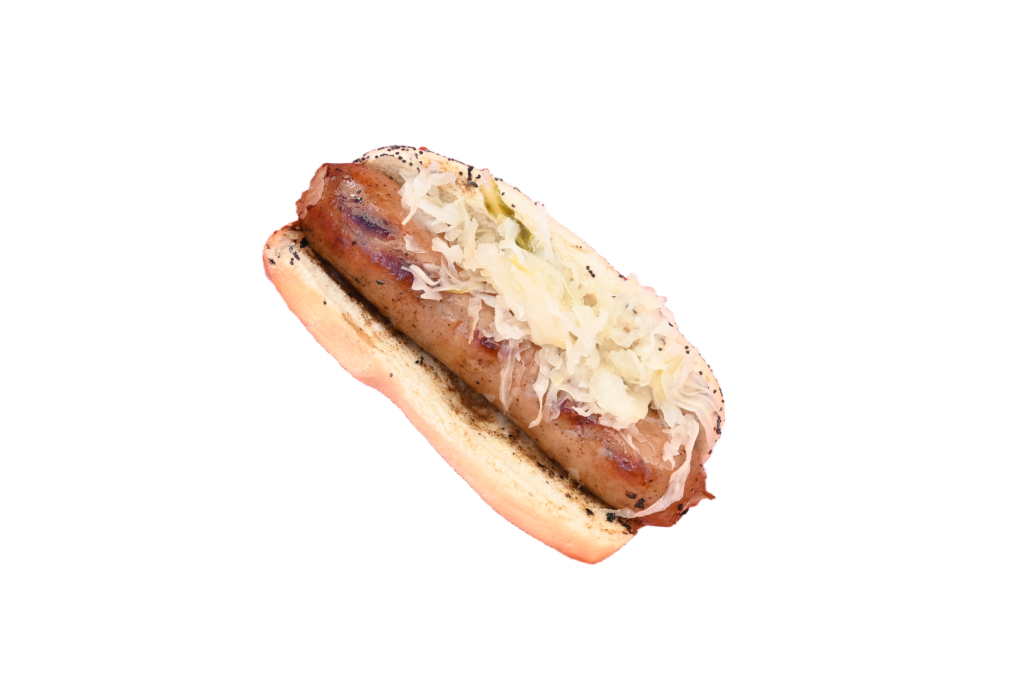
Sauerkraut benefits from being warmed with a small knob of butter or a splash of its own brine, then cooked just until fragrant. Straight-from-the-jar kraut can feel harsh and cold. Warmed kraut tastes integrated.
Chili should be thick and fine-textured. Chunky, soupy chili belongs in a bowl, not on a hot dog. The best hot dog chili clings to the sausage and settles into the bun without leaking everywhere.
Pickled peppers or sport peppers can add brightness, but use them with purpose. On a simpler dog, they may steal attention. On a richer, heavier build, they can provide exactly the acidity you need.
What to drink and serve alongside, without turning it into a cookout cliche
A restaurant-style hot dog meal does not require much around it. That is part of the appeal. Crisp fries, potato chips with real crunch, or a vinegar-heavy slaw all make sense because they sharpen the meal instead of weighing it down. Baked beans can work, though they tip the plate toward sweetness if your toppings already include relish or ketchup.
For drinks, cold lager, sparkling water, iced tea, or a basic fountain-style soda all fit. The logic is simple. A hot dog is salty, rich, and a little fatty. It likes contrast. You want something cold and cleansing more than something complex.
The home advantage
Restaurants have consistency, but home cooks have freedom. You can choose a better brand than some casual spots use. You can warm the bun exactly the way you like it. You can make the onions sharper or sweeter, the mustard milder or spicier, the dog more charred or more tender. Once you understand the mechanics, the home version can be every bit as satisfying, sometimes better.
The trick is to stop treating the hot dog like a throwaway meal. It is fast food in the best sense, but it still rewards attention. Buy a good frank, warm the bun, control the heat, keep the toppings in balance, and serve it the moment it is ready. Those are restaurant habits. Bring them into your kitchen, and the difference shows up in the first bite.
Under Construction Hot Dogs
1225 W U.S. Hwy 50, Pueblo, CO 81008
FAQ About hot dog
What are different types of hotdogs?
Under Construction Hot Dogs offers a classic all-beef hot dog, a quarter-pound Jumbo Dog, a Chili Dog, and a Chicago Dog, along with brats and a Spicy Link.
What does a chili dog have on it?
Our Chili Dog pairs a Vienna all-beef hot dog with chili, shredded cheddar cheese, and finely diced onions.
What is in a traditional Chicago dog?
Our Chicago Dog comes on a steamed poppy seed bun with yellow mustard, bright green relish, onions, tomato wedges, a pickle spear, sport peppers, and celery salt.